Working together in Neurology services
Neurology is a specialist service. It is one of our ‘blueprint’ areas for our SACS work. There are only four FTs in the region who provide this care and the demand on services is high.
About one in three patients wait more than 18 weeks. Care is not the same in every area. Some FTs have fewer staff. Too many patients go to hospital when they don’t really need to. Neurology leads have looked at the headache pathway first. The work so far includes:
- using the same process for referrals to help people get the right care quickly.
- working to the same guidelines for clinical care.
- creating new care pathways with more care outside of hospital.
- sharing the skills of staff across FTs with less need for costly short-term fixes.
- giving more advice and guidance to help GPs to help support patients.
- a new pharmacy pilot to support people with headache care.
“By joining up what we do, we can see more patients sooner. We are also making care more consistent and in ways that are easier for patients to access."
Improving gynaecology care through teamwork
Women’s health services are another blueprint area for our SACS work. The number of referrals has gone up by over 50% in the last three and a half years. Many women wait more than 18 weeks. This affects their health, how they feel, and their ability to work.
All FTs came together to plan services, increase capacity and focus on those most in need. National funding has helped to:
- support women who have been waiting the longest for care.
- help women access care who live in poorer areas.
- focus on common problems all women have. This includes heavy periods, the menopause and pain in the pelvic area.
- start weekend clinics so women don’t have to miss work or arrange childcare.
- put on more than 2,500 extra appointments in just six months.
- improve how we triage women and make it easy to see us again.
By focusing on the women who need the most help, we are making care fairer for everyone. Our work so far means we now see over 64% of patients in 18 weeks.
“We now see women much sooner and make sure they get help earlier. This helps reduce time off work and disruption to daily life. Weekend clinics make it easier for women to attend and they miss less appointments.”
As a region we helped over 1,000 patients get their treatment sooner in 2024.
The Mutual Support Framework helps facilitate the easier movement of patients between North East and North Cumbria Providers for their elective care.
To discuss this we're joined by County Durham and Darlington NHS Foundation Trusts Executive Director of Operations Lorraine Nelson and Associate Director of Operations Felicity White.
Lorraine and Felicity talk about how the Mutual Support Framework has helped reduce waiting times across the region.
Our elective care and recovery programme has been in place for three years. Its core priorities have been to improve access and eliminate long waits. To do this we aim to improve capacity and productivity, system transformation and increasing resilience.
As a region we have strived to create a safe and supportive environment for operational teams to openly discuss challenges, share learning and seek support. This has involved the start of a cultural journey and shift in mindset in how the providers work together, moving away from competition, to building true collaboration and teamworking across organisational boundaries.
Click here to find out what we have done so far and the impact its had on our region.
Background
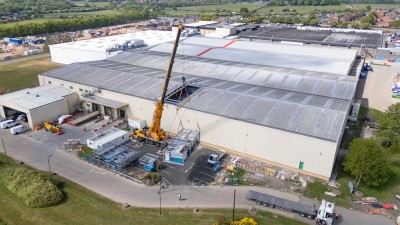
The North East and North Cumbria Medicines Manufacturing Centre (MMC) is a flagship initiative led by the region’s Provider Collaborative. The facility is designed to address pressing healthcare and economic challenges by making injectable medicines like chemotherapy and antibiotics.
Located in Seaton Delaval, the MMC received formal approval in September 2024, backed by a £29.7 million investment from NHS England and the Department of Health and Social Care. It is supported by all eight acute and community NHS Foundation Trusts across the region.
Why the MMC was needed
The MMC was established in response to three key challenges:
- Healthcare Efficiency: Hospitals across the region needed a more streamlined approach to producing injectable medicines. Existing aseptic units are operating at or near capacity and nursing staff were spending valuable time preparing medicines rather than delivering care.
- Quality and Safety: There is a growing need to ensure that injectable medicines such as chemotherapy and antibiotics are produced in a sterile, controlled environment to reduce contamination risks and improve patient outcomes.
- Economic Revitalisation: The closure of major employers like Proctor & Gamble had left a significant gap in the local economy. The MMC has offered an opportunity to create skilled jobs and support regional recovery.
Design and development
The MMC was carefully designed to meet strict rules for making aseptic medicines. A company called Merit is building it and work started in 2024. Significant progress has been made with the build and specialist equipment is being installed. The building should be finished and operational later in 2026.
Building the team
Recruitment has been a central focus throughout the project. Key leadership roles have already been filled, including the Head of Quality, Head of Production, Production Manager and Deputy Head of Quality. In March 2025, a Managing Director was appointed to oversee the build, manage recruitment and ensure the facility meets all regulatory requirements ahead of its launch. A number of highly skilled and talented team members have also been appointed from a variety of different backgrounds.
Further recruitment is planned throughout 2025/26, with around 80 staff expected to be hired this financial year and over 150 jobs created in total.
Expected impact
The MMC is projected to release over 2,500 nursing hours per week back to patient care. This means nurses will spend less time preparing medicines and more time with patients, improving both care quality and satisfaction.
Patients will benefit from receiving sterile, high-quality injectable medicines produced in a controlled environment, reducing the risk of contamination and ensuring consistent efficacy.
Economically, the MMC will provide a significant boost to the local area, offering new employment opportunities.
Lessons learnt
Throughout the development of the MMC, several key lessons have emerged:
- Stakeholder Engagement: Maintaining regular communication with stakeholders has been vital. Their involvement has helped secure support, navigate challenges and keep the project aligned with regional priorities.
- Expertise and Commitment: Building a dedicated and skilled team has been essential. The pace of the project has been demanding and ensuring staff wellbeing has been a priority to maintain productivity and morale.
Next steps
As the MMC moves toward completion, the focus for 2025/26 includes:
- Validate the equipment and facilities to ensure safe delivery of medicines and regulatory compliance
- Buy the systems and tools needed to check medicine quality
- Write clear instructions (called SOPs) for how everything will work
- Train new staff so they know how to do their jobs safely and correctly
- Approval and licencing via the medicines regulator the MHRA
What this means for our region
The MMC is a big step forward for healthcare in the North East and North Cumbria. The new facility will help patients get better care, give nurses more time and bring new jobs to the area. It shows what can happen when NHS organisations work together to solve problems, improve lives and is set to make a lasting impact across the region.
Eye services are a high-cost area for drug spend. During 2025 we worked with our eye care teams to look at lower cost ‘biosimilar’ drugs. These work in the same way as existing medicines. They are just as safe and effective but often cost less. This means we can save money while keeping the same good results for patients.
We brought our eye teams together to think about how to use these medicines in the best way. This helped us act faster and work in a more joined-up way. Without this, our FTs might have adopted the change at different speeds. Through this work we:
- used data to show differences in care
- helped teams use best-value medicines
- created space to share ideas and learning
- looked at ways to improve care pathways.
As a result, we helped save £4 million in four months. This was part of the £18 million saved by the Medicines Value Programme. That is just in eye services alone. We can now use this money to invest in other things. The work has made sure that patients now get equal access to treatment with less differences in care.
“Eyes on Value showed what can be done when organisations work together for a shared goal.”
The ‘portability agreement’ supports the effective temporary movement of staff between organisations across the North East and North Cumbria.
All Foundation Trusts in the region have signed up with the aim of cutting down on the usual lengthy recruitment timelines and support operational service delivery.
Terry Phillips who is the Clinical Network Manager of the North East and North Cumbria Congenital Heart Disease Network as well as County Durham and Darlington NHS Foundation Trust’s General Manager of Children and Young People's Service, Julie Southern. They joined us on NENC Providers Podcast.
Terry and Julie discuss how they used the 'portability agreement' and why there was a need to do so whilst also talking about how their departments/networks benefited and the challenges they faced.
This year (2025/26), we supported staff facing changes due to restructures in the system. A regional redeployment hub was set up to keep skilled staff in the NHS. The aim was to:
- support staff at risk of redundancy.
- fill jobs faster.
- use fair and clear processes.
Following a trial, we agreed on shared rules. This helped FTs and the ICB to be consistent.
Mark Speer is an Assistant Director of Finance at North East Ambulance Service NHS Foundation Trust. He has many years of experience in NHS finance. His daily work focuses on using money in the best way to make services work well.
Mark used the programme to explore how finance can support change and improve patient care. He worked with colleagues from across the system and built skills in leadership and teamwork. The programme helped him to:
- feel like he has more confidence when working in senior roles.
- think more about the wider system which he is part of.
- explain complex issues and ideas in a simpler way.
- play a stronger role in strategic work and support change in his own Trust.
- prepare himself for board-level roles that come up in future.
“The NExT Board Leaders programme is really important. Many of the challenges we face we share across the whole system. If we work together and understand these issues, we are more likely to make real progress.”
Watch highlights from the final event of the NExt Board Leaders programme here.
Across our region, there are 9 different systems that staff use to order tests and see test results. This causes problems for both patients and staff. It can lead to:
- delays in care
- wrong or repeated tests
- more work for staff
- stress and worry for patients.
Our FTs are working together to bring in one system. We will roll this out in stages. It will:
- make it easier for staff to request and track tests.
- allow staff to see results in one place no matter where they work.
- share information in a safe and simple way.
- reduce the need for repeat tests.
“Right now, it can take a lot of time to arrange simple tests across different systems. A single system will make a big difference. It will save time, reduce stress, and help us give patients the care they need without delay."
Patients on kidney dialysis travel lots of times each week for their care. This can be difficult and stressful. Some people use patient transport, even when other options may be better for them. This can create pressure on services and lead to unequal access.
We are working with South Tyneside and Sunderland NHS Foundation Trust (STSFT) to test a new model. The renal pilot helped to:
- design a clear and fair offer for patients.
- make sure eligible patients knew how to claim back travel costs.
- supports patients to use transport options that suit their needs.
- reduce the use of PTS when not for a clinical reason.
- give patients more choice and control over how they travel.
By being clear on transport options and giving choice, our aim is to focus resources where we need them most. This will also improve patient experience and make sure we have greater fairness in how we use PTS.
“This pilot gives patients more choice while helping ensure transport services are there for those who need them most.”
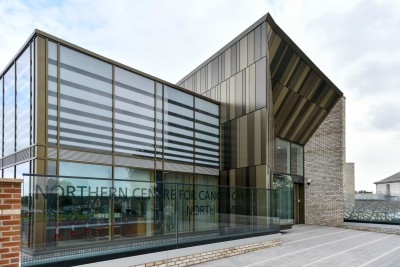
The Northern Centre for Cancer Care is a collaboration between Newcastle Hospitals and North Cumbria Integrated Care which brought all non-surgical cancer services under the same roof for the first time at Cumberland Infirmary.
With an investment of £35million, the centre opened two and half years ago to improve health outcomes for the local population of north Cumbria.
The building is managed by North Cumbria Integrated Care whilst services at the centre are run by Newcastle Hospitals as part of the Northern Centre for Cancer Care.
Development of the centre allows the majority of adult cancer patients in north Cumbria access to state-of-the-art facilities and receive their care closer to home. Previously, patients who required cancer services in north Cumbria had to travel to different parts of the Cumberland Infirmary for treatment with many of the facilities not fit for purpose or were referred to the Freeman Hospital in Newcastle for certain treatments and procedures.
Thanks to the two Trusts coming together they now provide one of the biggest combined cancer treatment services in the country. Each year the team provides around 9,000 radiotherapy treatments and over 10,000 chemotherapy treatments in Carlisle.